'Undertone' (2026): A Deafening Soundscape Muffled by Familiar Terrors
Ian Tuason's striking directorial debut boasts an incredible central performance and suffocating sound design, but repetitive narrative loops and safe genre tropes stall its deep thematic potential.

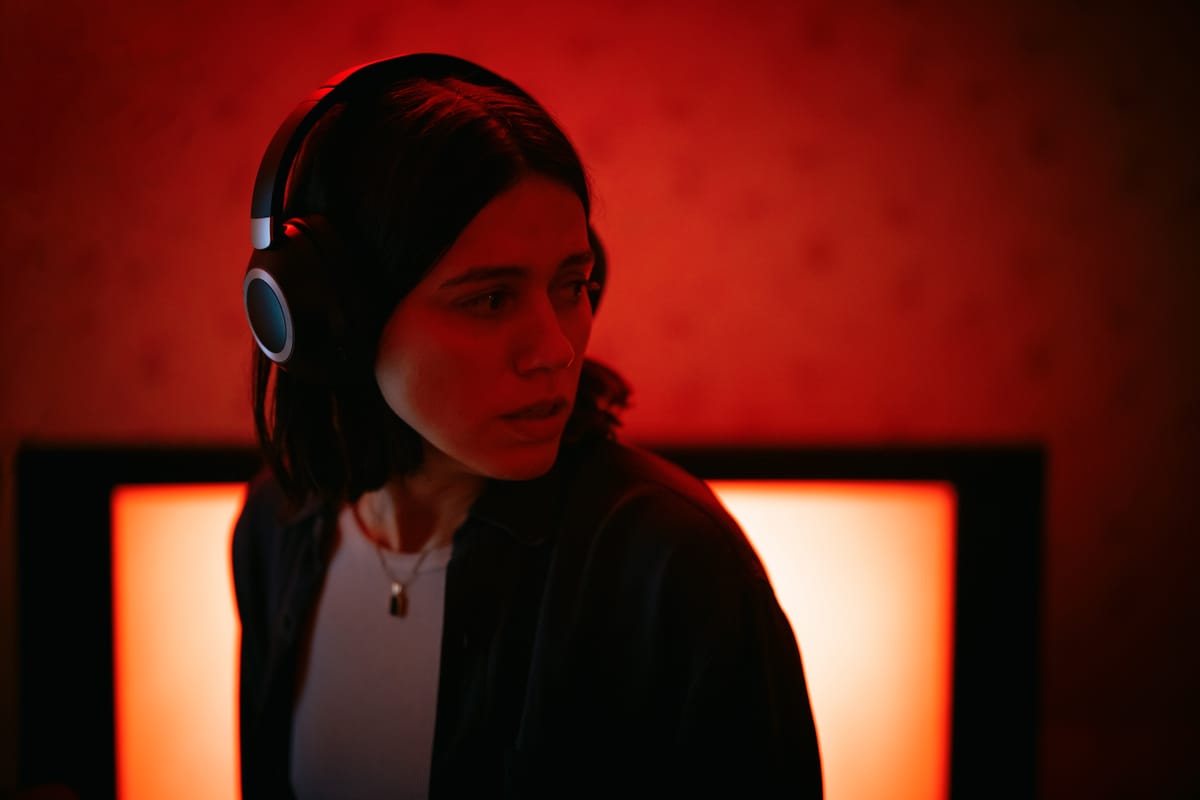
The sheer claustrophobia of a single-location directorial debut is always a massive draw for me, and Ian Tuason commands the auditory space of his first feature with absolute authority. Guided by an incredibly soulful, anchoring performance from Nina Kiri (The Handmaid's Tale), Undertone transforms the act of listening into a visceral weapon of terror. The stellar sound design crafts an immersive, suffocating atmosphere, masterfully dropping the room tone whenever Evy puts on her noise-canceling headphones, completely trapping us in her isolated world of caregiver exhaustion. It's a brilliant, fresh integration of the podcast medium into the horror genre, avoiding cheap gimmicks to explore how we use digital soundscapes to wall ourselves off from an overwhelmingly painful reality.
However, despite such a uniquely chilling foundational concept, the narrative momentum inevitably bogs down in a highly repetitive structural loop. Evy listens to a tape, reacts, experiences something eerie, and repeats, a cycle that slowly drains Undertone of its tension. Even the atmospheric directorial choices, like the patient camera pans captured by cinematographer Graham Beasley (Birthday Boy), begin to lose their initial impact as the story retreats into predictable, safe genre tropes. The final act devolves into conventional poltergeist shenanigans that feel far too messy, leaving the symbolism-heavy, somewhat open ending a bit unearned. While I hoped a deeper thematic study of reproductive anxiety and repressed guilt would fully crystallize under post-watch research, it ultimately becomes too muddled in its final minutes to truly stick the landing.
Even so, Undertone remains an unforgettable, incredibly bold calling card for Tuason that's bound to spark passionate conversations.
Rating: C