‘The Hunger Games’ (2012): Jennifer Lawrence Anchors a Solid Start to the Franchise
Jennifer Lawrence and a richly built Panem give the saga a solid start, even if shaky camerawork and softened violence keep much of the horror out of view.

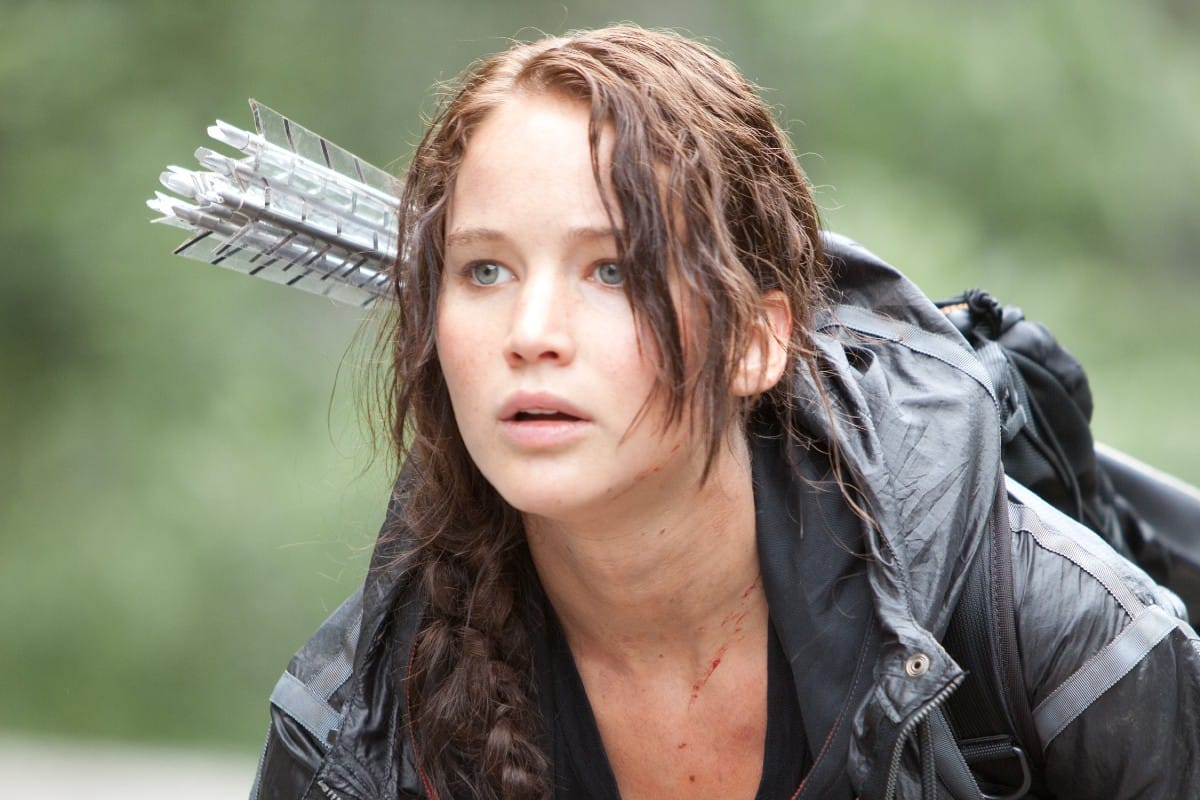
With a new Hunger Games film on the way, I’m heading back to the start of the saga, and this is the closest I’ll ever get to rewatching a franchise as if for the first time. I honestly don’t remember most of what happens. I couldn’t even rank the movies, and I have no idea where the general consensus landed on each one. I never read the books either, though word is this adaptation is quite faithful. I was excited to dive in, starting with the opening chapter from Gary Ross (Seabiscuit).
Jennifer Lawrence (Winter’s Bone) makes it obvious within minutes why Katniss became one of her defining roles. She has surprisingly little dialogue, so the intensity lives in her stare and posture, and I like that the film never polishes her: she stays muddy, guarded, rarely smiling. That rawness matters once the story turns her into a product. A hunter by necessity, Katniss has to perform to survive, learning poise from Effie (Elizabeth Banks, Pitch Perfect) and strategy from Haymitch, whose whole plan is to make the audience love her, since sponsors reward good television. Survival here is half archery, half charm offensive. As Peeta, Josh Hutcherson (Bridge to Terabithia) isn’t exactly dazzling, but he gives this first chapter what it needs.
Among a terrific supporting cast, Stanley Tucci (The Devil Wears Prada) is my other standout. His Caesar Flickerman is hysterically over the top, a sugary host whose grin carries real menace, and he doubles as the script’s cleverest device. Explaining the rules to the Capitol’s viewers means explaining them to us, so the exposition never feels forced. That’s the movie's sharpest idea — it’s entertainment about entertainment, and we’re watching from the Capitol’s seats. Everything in the arena is staged and sold, romance included. I found the love story fairly uninteresting, but that’s partly the point since it begins as a TV stunt. By the end, I didn’t buy it. Do they even believe it themselves? I’m still not sure whether one of them, or both, knew exactly what they were doing, but once again, I'd say that's the intent of it all.
The world-building impressed me most. From sets to costumes, the production design of The Hunger Games feels rich and distinct, pitting the flashy Capitol against the working-class poverty of District 12. The first half is the stronger one, as nearly every scene adds something essential about the history behind the Games and how the machine works, while the Reaping is brutal in how it tears a family apart before a silent crowd. The premise borrows from plenty of other films, yet it’s handled with enough weight to stand on its own. President Snow (Donald Sutherland, Ordinary People) sums up the politics: hope is useful in small doses and dangerous in large ones, and the Games exist to ration it, keeping twelve districts afraid while dangling one winner in front of them. Katniss’ compassion, especially toward Rue (Amandla Stenberg, The Hate U Give), is what threatens that balance. Stenberg, Banks, and Harrelson (No Country for Old Men) are all excellent.
The shaky cam and choppy editing are a real problem, an issue back in 2012 that has aged even worse. The action is a blur, and the shaking drains it of horror. Pair that with the toned-down violence, and we barely see the cruelty this entire world is built on. Even for PG-13, The Hunger Games sits nowhere near the line, and it could have pushed much harder. Ross feels too nice for a saga this harsh, so it’s no surprise he left after one movie. The Games also end flatly, with the biggest threats getting anticlimactic exits, some of them off-screen, and a final set piece too dark to make out. For all the early talk about tributes dying from natural causes, surviving the wild never looked that difficult.
The politics stay fairly shallow, though the sequels do more with those layers, and with so much exposition to get through, a deeper thematic study would have stretched an already long runtime even further. With a world this rich and a heroine this compelling, it’s a solid foundation for a franchise, even if Ross keeps too much of the horror out of frame.
Rating: B+